|
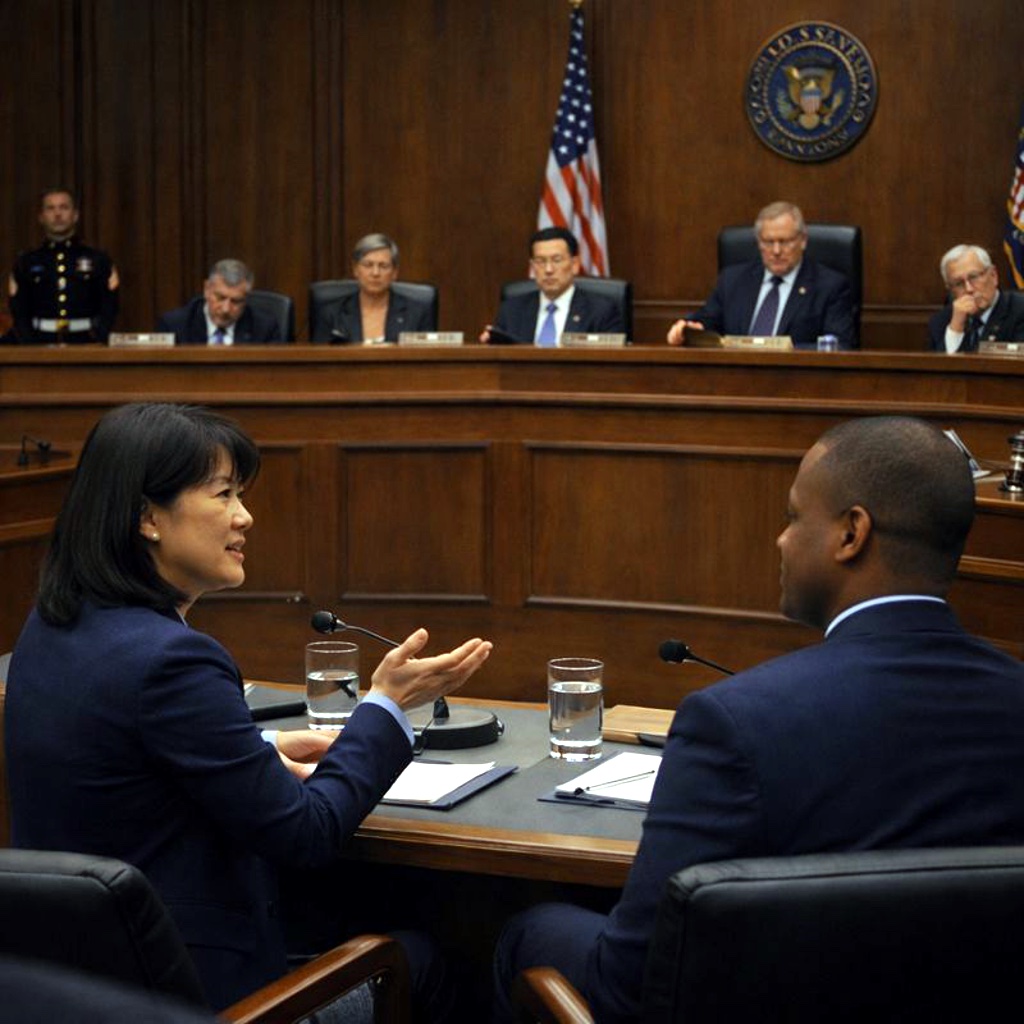
Senate HearingChairman Hendricks: This closed session of the Senate Committee on Health, Education, Labor, and Pensions will come to order. We're joined today by leadership from the Select Committee on Intelligence. What we discuss here is classified. Ms. Liu, Dr. Kerr, counsel—welcome. Let's begin. Senator Morrison? Senator Morrison: Ms. Liu, please confirm for the record: what is your current FDA regulatory status? Which approval pathway are you pursuing—Fast Track, Breakthrough Therapy, Regenerative Medicine Advanced Therapy—and what stage has your application reached? Margaret Liu: We're pursuing Breakthrough Therapy designation under biologics licensing. We submitted our IND eighteen months ago. Phase I data was filed last week. FDA has scheduled our pre-BLA meeting for March. Senator Chen: Dr. Kerr, you tested sixty-four subjects. Walk us through who was excluded and why. Were there categories of patients you deemed too risky or medically inappropriate for this trial? Dr. Kerr: We excluded active cancer, recent stroke, traumatic brain injury, and anyone under thirty-five. The therapy restores aging systems—it cannot regenerate destroyed tissue or reverse structural damage. Those patients wouldn’t benefit. Senator Castellano: Ms. Liu, you mentioned partnerships with multiple companies. Can you provide this committee a complete list of entities accessing your technology? Specifically: are any foreign-owned, and have foreign nationals accessed your research data? Margaret Liu: All partnerships are domestic. Chronexia, Helionyx, and Baseline Genomics. We've shared limited data under bilateral NDAs. No foreign entities, no foreign nationals. Our ITAR counsel has reviewed every agreement. Everything is clean. Senator Bradford: Let me be direct. Every adversary nation will want this technology. China, Russia, Iran—they'll steal it or coerce you. What protections exist? Do you have classified contracts with Defense or Intelligence Community? Margaret Liu: We're in preliminary discussions with DARPA and BARDA. Our facilities have DOD-rated physical security. All core research is air-gapped. We've briefed CIA on foreign collection threats. We're taking this seriously. Senator Reeves: The U.S. military has 1.3 million active personnel. If this extends effective service life for special operators and senior officers, should Defense have priority access over civilian release? Will Isochrona supply the military first? Margaret Liu: We haven’t agreed to exclusivity with anyone. If DOD requests priority allocation under Defense Production Act authority, we'll comply. But we won’t voluntarily create military-only access. That's a policy decision for Congress. Senator Park: You say treatment doesn’t work under age thirty-five or enhance youth. But have you tested repeated treatments? Can someone be treated at seventy, again at eighty, again at ninety? Are we discussing indefinite life extension? Dr. Kerr: We don’t know. Our longest therapeutic subject is three years post-treatment. They remain stable at biological thirty-five. Theoretically, yes—repeated treatment might be possible. We haven’t tested it. That's a Phase IV question. Senator Walsh: Let's discuss cost. What will this treatment cost per patient? How many Americans can afford it in year one? Will Medicare, Medicaid, or private insurance cover it? Or are we creating biological aristocracy? Margaret Liu: Manufacturing cost is approximately ninety thousand per patient currently. Scale should reduce that. We're in coverage discussions with CMS. If excluded from Medicare, yes—we risk creating exactly the inequality you're describing. Senator Okonkwo: Your research notes people arrive at thirty-five with different bodies based on prior healthcare access. Wealthy patients will have better outcomes. How do you respond to criticism that this amplifies existing healthcare inequality? Dr. Kerr: You're correct. Someone who's had excellent healthcare achieves better restoration than someone with untreated chronic conditions. The therapy can’t fix what was already broken. We're restoring, not perfecting. That's a limitation. Senator Kowalski: Dr. Kerr, discontinued treatment resumes aging. This isn’t a cure—it's a subscription. Patients depend on Isochrona forever. What happens if your company fails, gets acquired, or triples prices? You're creating biological dependence. Dr. Kerr: Phase III maintenance is one pill every ten days. We're establishing multiple manufacturing sources. We've discussed federal stockpile arrangements. If Isochrona disappeared tomorrow, generic production is feasible. The formula will eventually enter public domain. Senator Hartwell: Final question. Six months from now this becomes public. People die stealing it. Black markets emerge. Counterfeits kill. Wealthy elites stockpile while others riot. Ms. Liu, does Isochrona have a plan for preventing societal collapse when you announce this? Margaret Liu: Senator, we've consulted with HHS, FEMA, and DHS on controlled release protocols. We're coordinating with WHO on international distribution frameworks. Will there be chaos? Probably. Are we prepared? We're trying. This is bigger than our company. Chairman Hendricks: Thank you, Ms. Liu, Dr. Kerr. I'll enter one observation into the record. In thirty years on this committee, I've never heard testimony quite like this. We've discussed pandemic preparedness, bioterrorism, genetic engineering—but this is different. You're not preventing death. You're postponing it indefinitely. That changes everything. Social Security. Medicare. Retirement age. Population growth. Resource allocation. The entire social contract assumes people age and die on predictable schedules. You've just made that assumption obsolete. We'll reconvene at fourteen hundred hours. This session is adjourned.
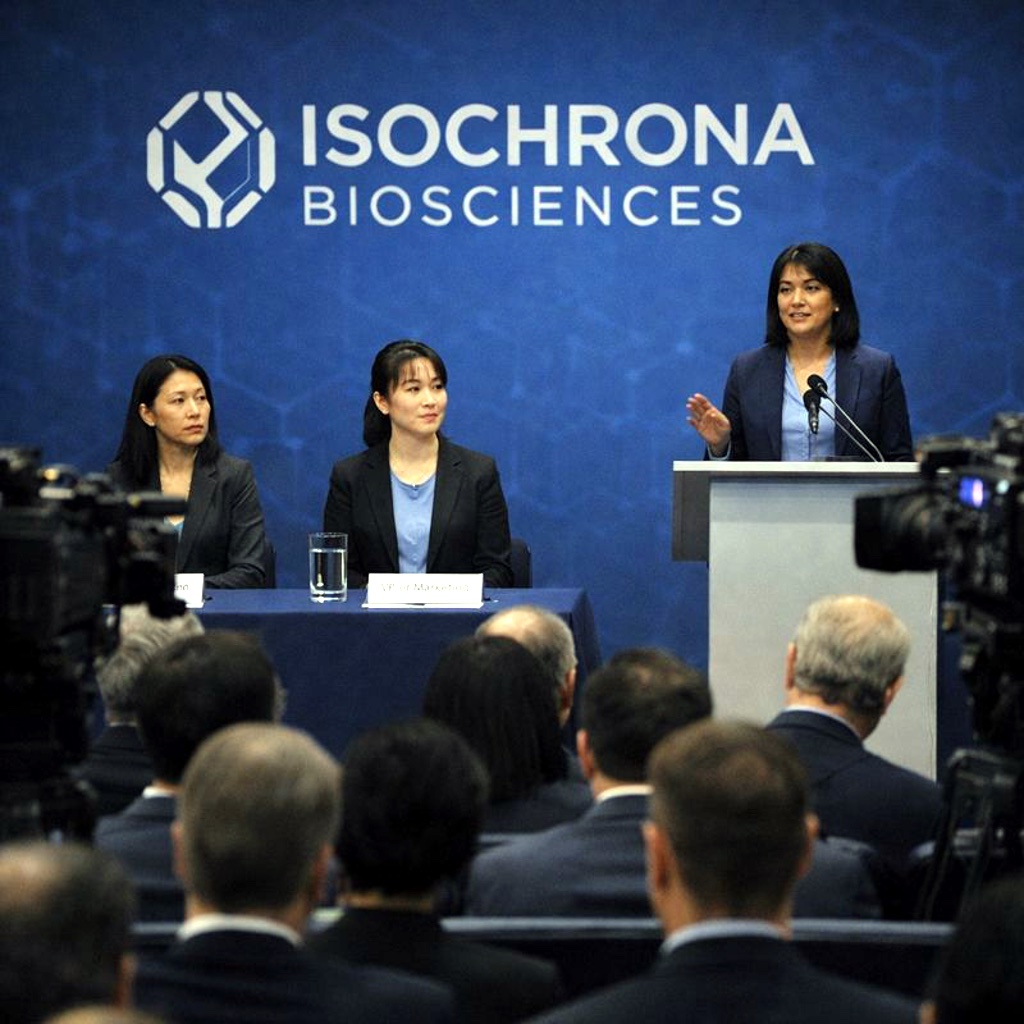
Press ReleasePriya Desai began with phone calls. She started with people she knew—editors and reporters whose judgment Isochrona respected and whose audiences mattered. The list was short and deliberate. “This is Priya Desai from Isochrona Biosciences,” she said, again and again. “We’re hosting a briefing next week. I can’t share details yet, but it’s not incremental. It’s something you’ll want to hear directly.” Some asked questions. She answered carefully, never fully. “It’s about our human program,” she said. “And where it goes next.” There were pauses on the line. Then, from more than one voice, the same response. “It could be interesting.” Within minutes of each call, a follow-up email arrived. The first message contained only a confidentiality agreement and a link for electronic signature. Those who signed received a second message: a brief, embargoed summary. No adjectives. No projections. Just structure. By the end of the day, most of the names she had called would be there. On the morning of the briefing, journalists arrived in quiet waves. Isochrona’s headquarters was glass and concrete, understated and precise. There were no banners, no slogans. Security was present but unobtrusive. Staff spoke softly and efficiently. Phones were sealed into pouches. Laptops were permitted but disconnected. Each attendee signed a document longer than most book contracts. Journalists were escorted into a conference room and handed slim folders. A short document printed on matte white paper was clipped to each folder. Isochrona Biosciences has the pleasure of announcing a controlled civilian deployment of a restorative biotechnology platform known internally as Pill 35. The initial deployment will be conducted through a limited subscription-based program referred to as the First 1000 Program. Results from Isochrona's test trials and additional details are included in your Isochrona press conference folder. The room was silent as people read. A few exchanged glances. Others made notes. Whatever this was, it did not feel like a product launch. It felt like a threshold. The press was ushered into a larger hall. The stage was minimal: a lectern, three chairs, a screen displaying the Isochrona logo. Cameras were arranged in neat rows. Lighting was bright and neutral. Margaret Liu walked onto the stage without ceremony. She did not pause for effect. She waited until the room settled. “Good morning,” she said. “Thank you for coming.” Her voice was calm. “Isochrona Biosciences was founded to address a specific category of biological decline associated with aging,” she said. “Over the past several years, we have conducted extensive animal and human research under approved clinical protocols. Today, we are announcing the next phase of that work.” The screen changed. Restorative Age-Related Intervention Platform “We are not announcing a consumer product,” Liu said. “We are not announcing an anti-aging supplement. We are announcing the controlled civilian deployment of a restorative medical technology.” “The internal name for this technology is Pill 35.” She stepped slightly back from the lectern. “Our VP of Marketing, Priya Desai will explain how we are communicating this.” Priya Desai approached the microphone. Her tone was precise. “We’ve been deliberate in how we describe this,” she said. “Language matters. Expectations matter.” The screen displayed three phases. “Pill 35 is not a single event,” she said. “It is a staged intervention: installation, restoration, maintenance.” “Because the technology is complex, manufacturing capacity is limited, and safety monitoring is essential, initial civilian access must be controlled.” She turned slightly toward Liu, then back to the audience. “This brings us to the First 1000 Program.” The screen changed. “The First 1000 Program is a subscription-based early access framework,” she said. “It will enroll up to one thousand subscribers in phased cohorts over time.” First 1000 Program — Overview “Our responsibility is to scale this technology responsibly,” Chen said. “We cannot deploy it to millions of people immediately. That would be medically reckless and operationally impossible.” “This is not exclusivity for its own sake,” Chen said. “It is logistics.” Laura Chen took the stage. “Hello, I am Laura Chen, Isochrona's VP of Sales. Isochrona's initial cohorts will be selected based on medical eligibility and compliance requirements,” she said. “Subscribers will fund their own treatment and monitoring. Over time, scale will reduce cost.” “We expect this technology to become more accessible as production expands,” she said. “But initial access, like all complex medical technologies, will be limited. The press folders passed out today and our updated company website contain sales contact information. Isochrona has added a First 1000 Program application form to its website. Applicants can request to be added to our waitlist in case they do not make the initial First 1000 Program cut off. Thank you.” Margaret Liu returned to the lectern. “We understand the implications of what we are announcing,” she said. “We also understand the responsibility.” She looked into the cameras. “We are not promising outcomes beyond what our data supports,” she said. “We are not promising universal access tomorrow. We are promising controlled progress.” She inclined her head. “Thank you for being here today.” The conference ended quietly. No one stood immediately. When the embargo lifted at the end of the press conference, the world heard about Pill 35 in fragments. Local Newspaper: Isochrona Biosciences announces controlled civilian deployment of restorative age-related technology. Analysts describe the development as potentially transformative for modern medicine. National Evening News: Silicon Valley biotech company Isochrona Biosciences says it has developed a treatment that may reverse certain effects of aging. The company plans a limited initial rollout through a subscription-based program. Biotech Review Journal: Isochrona’s language is notable for its restraint. The company frames Pill 35 as a restorative intervention with defined limitations rather than a promise of immortality. Financial Network Commentary: Investors are watching closely. If Isochrona’s claims hold, the company could redefine healthcare economics, though broad access may remain years away. Tech Blog Headline: Silicon Valley Just Announced the Most Expensive Subscription in History. In living rooms and offices, people replayed clips of Margaret Liu speaking calmly at the lectern. They noticed what she did not say. She did not promise miracles. She did not deny ambition. She simply described a future that had already begun. Inside Isochrona’s headquarters, the building looked much the same as it had the day before. People returned to their labs. Meetings resumed. Data was reviewed. Outside, something had shifted. Not suddenly. Not violently. But permanently. For the first time, aging had been described not as fate, but as a system. And systems, people knew, could be engineered.
SubscribersOver the course of the next month, Isochrona’s secure application portal filled steadily. Applications arrived from technology executives, financiers, senior scientists, retired officials, and global entrepreneurs. Others came from surgeons nearing retirement, founders who had sold companies once and hoped to build again, and families quietly pooling resources with deliberate resolve. Some applicants wrote long personal statements. Others submitted only data. Some framed their interest as medical necessity. Others framed it as opportunity. Most framed it as inevitability. Isochrona’s team built a layered review system. Medical eligibility came first, followed by psychological stability, compliance risk, and operational predictability. The system filtered applicants in stages, separating feasibility from volatility. Some of the richest applicants were told to wait. Others were deferred for reasons that had nothing to do with money. Decisions were logged, reviewed, and justified in internal systems designed for audit, not speed. The First 1000 Program pricing options were direct and unambiguous: a five-million-dollar initiation fee with five-hundred-thousand-dollar annual maintenance, or a ten-million-dollar all-inclusive lifetime contract. Each agreement required extensive legal waivers, long-term data rights, and compliance with monitoring protocols that extended indefinitely. Subscribers were not simply purchasing treatment. They were entering a system. Among the earliest accepted subscribers was Daniel Roth, a Silicon Valley software founder who had built and sold two infrastructure companies before the age of fifty. His wealth came from enterprise platforms and long-term licensing contracts, not consumer products. He spoke of time the way others spoke of capital—something to be allocated, preserved, and reinvested. During his intake interview, he asked few emotional questions and many technical ones. He wanted to understand update cycles, maintenance protocols, and failure contingencies. For Roth, Pill 35 was not salvation. It was infrastructure. Another early subscriber was Judge Elaine Morano, recently retired from the federal bench. Her wealth came not from excess but from decades of careful accumulation, conservative investment, and disciplined planning. She had spent most of her career making decisions that shaped other people’s futures. In her interviews with Isochrona’s intake physicians and legal staff, she spoke quietly and precisely. She described her decision not as ambition, but as continuity. She did not speak about fear. She spoke about unfinished work. A third was Viktor Halevi, a European biotech investor whose fortune rested on pharmaceutical acquisitions and long-term research holdings. He viewed Pill 35 with clinical detachment. In private conversations, he referred to it less as a breakthrough than as a convergence. He had funded enough research to recognize patterns when they emerged. For him, Isochrona’s work was not surprising. It was simply early. The first cohort was assembled deliberately. Age ranges were spread. Health profiles were diversified. Behavioral risk models were weighted heavily. Predictability mattered more than prestige. Inside Isochrona, the term “subscriber” replaced “patient” in internal documentation. The program was not structured as a clinical trial. It was structured as a managed deployment. Two months into the program, Isochrona’s internal metrics were stable. Biological indicators tracked within expected ranges. Compliance rates were high. Monitoring systems held. Manufacturing output matched projections. Data pipelines remained clean. No unexpected feedback loops appeared. No containment protocols were triggered. Regulatory reporting remained routine. The company authorized commencement of the second batch of one hundred subscribers. Preparation followed the same structure: intake reviews, medical screening, legal processing, logistical scheduling. Nothing accelerated. Nothing was improvised. Each new cohort was treated as a continuation, not an expansion. By the fourth month, preparations for the third batch were underway. Judge Morano had withdrawn from the program. Her decision was not impulsive. It followed weeks of private correspondence, consultations, and internal deliberation. She informed Isochrona that she no longer wished to participate and requested a full refund of her initiation payment. Isochrona declined. The contract was explicit. The waivers were comprehensive. The data rights and compliance obligations were clear. Entry into the First 1000 Program was not a reservation. It was an agreement. Litigation followed. The case moved quickly. The court ruled in Isochrona’s favor. The contractual language was unambiguous. Morano filed an appeal. The appellate court dismissed it without trial. The third batch proceeded as scheduled. Inside Isochrona, operations continued. Engineering teams refined monitoring systems. Manufacturing teams maintained output stability. Clinical staff prepared intake schedules. Legal teams updated compliance frameworks. Communications staff tracked external narratives without responding to them. The First 1000 Program was no longer an announcement. It was a process. Subscribers were no longer abstractions. They were files, metrics, schedules, compliance reports, and biological trajectories moving through a system designed for scale. Outside the company, the world began to adapt to the idea that access would come in stages, not all at once. That some would enter first. That others would wait. That time itself was becoming something that could be scheduled, monitored, and maintained. Inside Isochrona, the language remained unchanged. Deployment. Cohorts. Compliance. Stability. Continuity. No one used the word “immortality.” No one used the word “miracle.” They spoke instead of systems. And systems, once built, did not ask permission to exist. They simply continued.
ActressJaime King did not tell anyone when she started taking Pill 35. Not at first. The decision came quietly, after months of polite deflection and a single, insistent phone call from Rick Donnelly, who had been her agent since the years when people still called her a star without irony. “You don’t owe anyone anything,” Rick had said. “But if you’re going to do it, do it now. Don’t wait until everyone else has already decided what it means.” So she did. One pill a day. No ceremony. No mirror-checking rituals. She kept working out, kept reading scripts she didn’t intend to accept, kept living as if nothing had changed. For the first few months, nothing obvious did. Then came the smaller signs. Her joints stopped aching in the morning. Her voice warmed more easily. She noticed she could stand for long periods without shifting her weight, could rehearse without calculating how much energy she’d have left afterward. By month eight, the casting calls started again. Rick landed her a role in “Ashlight”. Not a lead. Not even close. A supporting part written with the kind of solemn minimalism that suggested the writers believed restraint alone could substitute for depth. Jaime played Margaret Keene, a woman who appeared in three scenes and spoke less than a dozen lines. The role was respectable. Forgettable. Jaime took it anyway. The movie failed. Not spectacularly. Just enough to invite disappointment. Critics were unkind in the way reserved for actors who critics believed had already had their chance. “Wasted,” one review said. “Miscast,” said another. “A reminder that Pill 35 rejuvenation cannot restore relevance,” wrote a third even more pointedly. Jaime read the reviews alone, late at night, and cried, her tablet glowing softly in the dark. She felt the old familiar tightening in her chest — not the fear of failure, but the sharper pain of being reduced. She wiped tears off her tablet. The pill had restored her body. It had not restored her place. She stopped answering Rick’s calls for a while. Instead, Jaime auditioned for theater. The Calder Stage sat on a quiet street, far from premieres and press junkets. The audition room was small. The lighting unforgiving. There were no cameras to charm, no edits to save her. Just her voice, her timing, her presence. She did well. Not brilliantly. Not immediately. But she did well enough to be invited back, then cast, then trusted. The performances were intimate, demanding. Night after night, she relearned what it meant to listen onstage, to give space, to let silence do work. The audience was close enough that she could feel their breathing. By the time the year passed, Jaime no longer thought about Pill 35 at all. She looked thirty-five again — undeniably so — but more importantly, she felt something she hadn’t in decades: available. That was when she called Mark Hale. They had worked together years ago, in films people still referenced when they wanted to sound nostalgic but discerning. Jaime and Mark's chemistry had been effortless then, the kind that made directors feel clever for having cast them together. Mark answered on the third ring. “You sound young,” he said, after she explained. “So do you,” she replied. It took longer for Jaime to convince Mark about Pill 35. Mark had his reasons. His doubts. His body, unlike hers, had paid a heavier price for the years. But eventually, he agreed. Mark put himself on the Pill 35 regimen. Another year passed. Jaime and Mark didn’t rush it. They worked theater together. Smaller roles. Shared scenes. Rediscovered rhythms they had once taken for granted. When Mark’s voice settled back into its old register, when his movements stopped looking careful and started looking intentional, something unmistakable returned between them. Not youth. Understanding. A movie script proposal for “Back to the Romance” arrived without fanfare. An ensemble piece. Character-driven. Quietly ambitious. Jaime and Mark accepted without negotiating. The film succeeded. Not explosively. Not trendily. It succeeded because audiences leaned in. Because critics noticed something difficult to quantify. Because the performances felt unforced, precise, shared. On the night of the premiere, Jaime and Mark stood together beneath the lights outside the Actors Academy Theater on Wilshire Boulevard. Cameras flashed. Reporters shouted their names, delighted to rediscover them. Jaime and Mark raised their hands — not in triumph, but acknowledgment — and for a moment, the noise receded. Jaime glanced at Mark and smiled. This time, she knew exactly why it worked. It had never been just her. And now, it didn’t have to be. |

|
Pill 35 (Part 2)
|