|
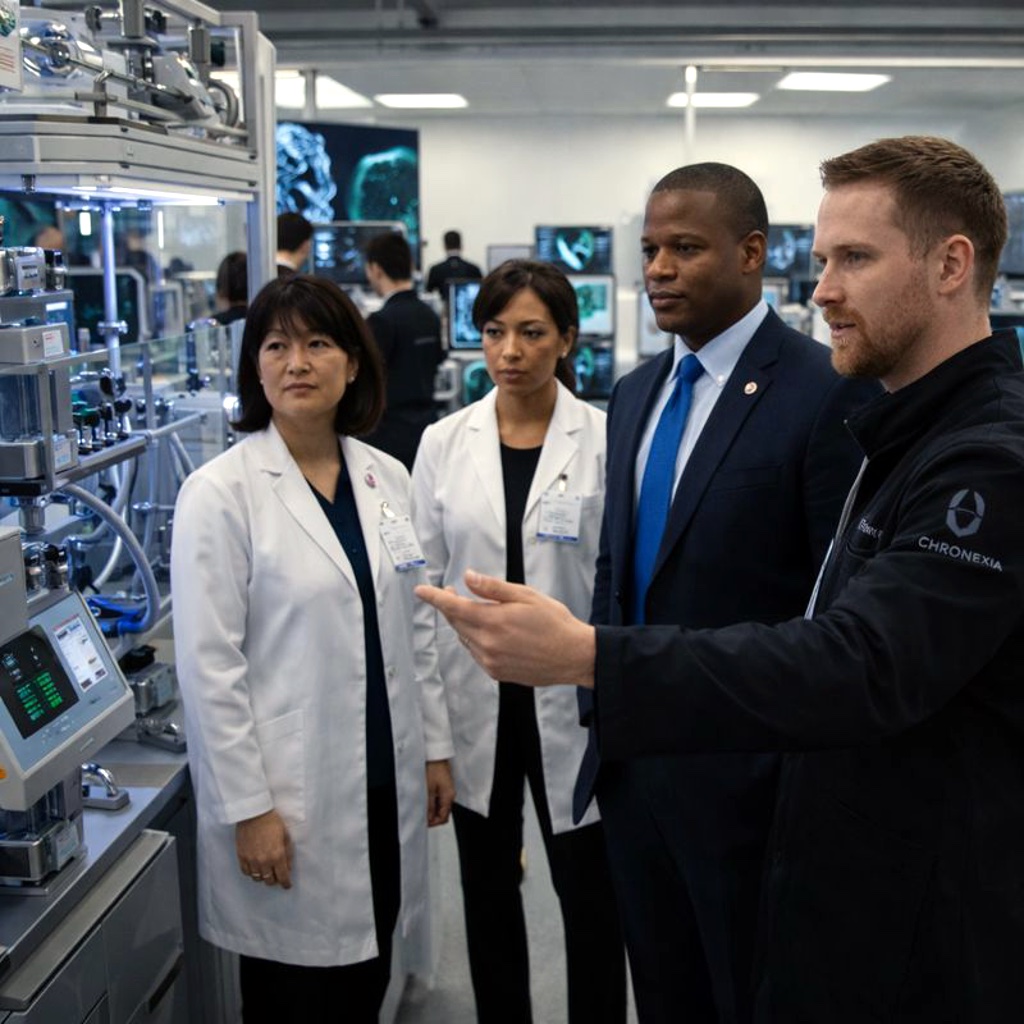
ChronexiaChronexia’s CEO, Dr. Adrian Keller, joined by Dr. Mei-Ling Zhao and Dr. Sofia Alvarez Montoya, greeted Isochrona’s Margaret Liu, Dr. Samuel Kerr, Dr. Rajesh Patel, Dr. Elena Márquez, and Dr. Aisha Reynolds at Chronexia's entrance. “Let's go inside,” said Dr. Keller. Chronexia’s Organ Transplantation Lab resembled neither a surgical theater nor a warehouse. It was something closer to a biological logistics center. Behind transparent isolation chambers, organs were suspended in perfusion systems that simulated blood flow. Screens tracked cold ischemia time, antibody profiles, and predicted graft survival curves. Dr. Elena Márquez paused before a display labeled “allograft compatibility”, watching algorithms compare donor HLA markers against thousands of recipient profiles. “Most transplants still fail for the same reason,” Chronexia's Dr. Viktor Haldane explained. “The immune system recognizes the graft as foreign.” He gestured toward a chart mapping histocompatibility across populations. “Even with immunosuppression, acute rejection and chronic rejection remain the dominant limiting factors. Chronexia and Isochrona’s work is changing that equation,” Haldane added. Dr. Aisha Reynolds studied a neighboring station where technicians modeled immune responses in real time, simulating antibody-mediated rejection before a single incision was made. Rajesh Patel leaned closer to a vitrified heart scaffold. “You’re not just extending graft survival,” he said. “You’re trying to redesign the immune negotiation itself.” Margaret Liu nodded slowly as she read a list of transplantable tissues—cornea, bone, skin, vessels—alongside organs that once defined mortality: heart, liver, lungs, pancreas. Chronexia’s Cell Lab felt quieter than the others, as though the real work here happened below the threshold of sight. Behind layered glass, technicians monitored cultures derived from hematopoietic stem cells—self-renewing progenitors capable of reconstituting entire blood and immune systems. Screens mapped differentiation pathways: myeloid lineages, lymphoid lineages, predicted engraftment success after transplantation. “These cells,” Chronexia's Dr. Amina Qureshi explained, “are the foundation of immune identity. Replace them, and you rewrite the body’s defensive architecture.” Dr. Aisha Reynolds paused before a second chamber where oocytes and donor mitochondria were displayed in rotating molecular models. “Mitochondrial replacement therapy,” she said quietly. “Correct,” Qureshi replied. “We isolate nuclear DNA from one cell and combine it with healthy mitochondria from another. The goal is to prevent mitochondrial DNA disorders—but the implications go further.” Rajesh Patel studied a simulation of ATP production across cellular networks. “You’re not just correcting mutations,” he said. “You’re optimizing cellular energy systems.” Qureshi nodded. “Chronexia’s models help us see that mitochondrial efficiency and stem-cell renewal are not separate problems, but the same system viewed at different scales.” The Isochrona team watched as algorithms compared heteroplasmy levels and metabolic efficiency curves. Chronexia’s Artificial Organ Lab was brighter than the others, illuminated by the soft glow of machines that never slept. Here, organs were not harvested—they were assembled. Behind sealed enclosures, bioreactors nurtured living tissue on three-dimensional scaffolds made from biocompatible polymers and decellularized extracellular matrix. Dr. Elena Márquez watched as a technician adjusted perfusion rates through a lattice of microvascular channels designed to mimic natural blood flow. “This isn’t mechanical replacement,” Chronexia's Dr. Jonathan Park explained. “It’s functional integration.” He gestured toward a hybrid heart prototype: part synthetic pump, part living myocardium. “Mechanical organs solve physics. Bioartificial organs solve biology.” Dr. Aisha Reynolds examined a display mapping cell differentiation across engineered tissue layers. “Without vascularization,” she said, “the tissue dies.” “Exactly,” Park replied. “So we grow the vessels first.” Rajesh Patel studied a liver construct suspended in nutrient media, its structure forming gradually through guided regenerative signaling pathways. “You’re not repairing organs,” he said. “You’re teaching the body how to rebuild them.” Park smiled faintly. “Isochrona’s operating system tells us when rebuilding is enough—and when replacement is no longer necessary.” Chronexia’s Organ Printing Lab sounded different from the others. There were no alarms, no surgical instruments—only the steady hum of precision machines laying down life one layer at a time. Inside a glass enclosure, a bioprinter moved with deliberate slowness, extruding bioink composed of living cells suspended in hydrogel matrices. On a screen above it, a three-dimensional organ model unfolded in cross-section, each layer mapped for spatial resolution, mechanical stability, and cellular viability. “This is not ordinary 3D printing,” Chronexia's Dr. Katarina Volkov explained. “Plastic forgives mistakes. Biology does not.” Dr. Elena Márquez watched as multiple print heads deposited different cell types in coordinated patterns. “You’re recreating tissue architecture,” she said. “Yes,” Volkov replied. “Including vascular networks.” Volkov pointed to a simulation where sacrificial materials formed temporary channels that would later dissolve, leaving space for blood vessels to grow. Nearby, a newly printed kidney structure was transferred into a bioreactor, where it would undergo weeks of maturation before it could sustain metabolic function. Rajesh Patel studied the data feed. “So the printing is only the beginning,” he said. “Exactly,” Volkov said. “Printing creates structure. Regeneration creates life.” Volkov glanced at Patel. “Isochrona’s intervention lets us reset organs for longevity rather than survival.” Chronexia’s Temporal Homeostasis Lab was the final stop on the tour. Dr. Sofia Alvarez Montoya led them into a control suite overlooking a cluster of sealed experimental chambers, their interiors filled with immersed organs on scaffolds generating streams of synchronized biological telemetry. Layered displays tracked telomere restoration, mitochondrial recovery rates, inflammatory markers, and endocrine responses in parallel timelines. “We learned early,” Montoya said, “that repairing the body too quickly can be as dangerous as not repairing it at all.” She expanded a projection showing staggered activation curves across multiple biological systems. “Chronexia’s Temporal Homeostasis Architecture doesn’t accelerate rejuvenation,” she continued. “It orchestrates it. Each pathway is modulated in sequence—cellular repair, metabolic normalization, immune recalibration—so the organism never experiences restoration as shock.” Samuel Kerr studied the flowing graphs. “You’re managing the biological time clocks.” Montoya allowed herself a faint smile. “Exactly,” she said. “If longevity technologies rewrite the body, Temporal Homeostasis ensures the story unfolds at a pace the body can survive.” Isochrona and Chronexia’s hosts had a quick lunch in Chronexia’s cafeteria. Chronexia’s lunch ended without ceremony. Within minutes, the group was moving again, stepping into a shuttle van that pulled away from Chronexia’s driveway and threaded through the surrounding industrial streets of South San Francisco before merging into the steady flow of Bay Area traffic. Outside the windows, hotels, office blocks, and research buildings slid past in uneven patterns. Twenty minutes later, they entered the atrium of Bay Area Translational Research Hospital. The hospital felt different from Chronexia—less speculative, more burdened by clinical reality. Corridors carried the quiet urgency of ongoing clinical trials. Screens along the walls displayed transplant waitlists, graft survival curves, and real-time occupancy in intensive care units. Dr. Adrian Keller paused beside a conference room as hospital staff joined them. “Our primary constraint,” said Dr. Lila Chen, head of clinical integration, “is not innovation. It’s throughput.” She gestured toward a dashboard tracking transplant outcomes. “Your engineered organs have reduced failure rates. But patient complexity is rising faster than our ability to adapt protocols.” Dr. Jonathan Park nodded. “You’re seeing systemic interactions we didn’t model.” “Exactly,” Chen replied. “Immune responses, comorbidities, aging physiology—everything intersects.” Nearby, a surgeon added quietly, “We don’t just need better organs. We need better coordination between biological systems.” Keller listened without interrupting. Around them, clinicians continued to speak in precise, measured terms—not about possibilities, but about pressures that never paused. The future felt less like a vision and more like an approaching deadline. After returning to Chronexia, the mood shifted. The conference room was smaller now, the glass walls dimmed to opacity. Outside voices faded; inside, diagrams replaced pleasantries. Dr. Sofia Alvarez Montoya began without preamble. “We are approaching the limits of incremental improvement,” she said. “Our organs last longer. Our cells perform better. But complexity is outpacing optimization.” Mei-Ling Zhao expanded a projection of layered biological systems. “We can engineer parts,” she said. “What we cannot yet engineer is coordination. Every subsystem works, but the organism does not.” Samuel Kerr studied the model in silence. “What we need,” Montoya continued, “is a way to stabilize the body as a whole—not organ by organ, but system by system.” Margaret Liu met Patel’s eyes briefly. Keller folded his hands. “If such stabilization were possible,” he said carefully, “it would change the economics of transplantation, artificial organs, even regenerative medicine.” Outside the building, evening light settled over the campus. Minutes later, the shuttle van pulled away from Chronexia’s entrance. No one spoke at first. Finally, Kerr said quietly, “They’re not just asking for organ upgrades anymore.” Patel nodded. “They’re asking for a better operating system for the entire human body.” The shuttle van returned toward the Isochrona Biosciences building, leaving Chronexia behind—its laboratories still glowing, its questions unresolved.
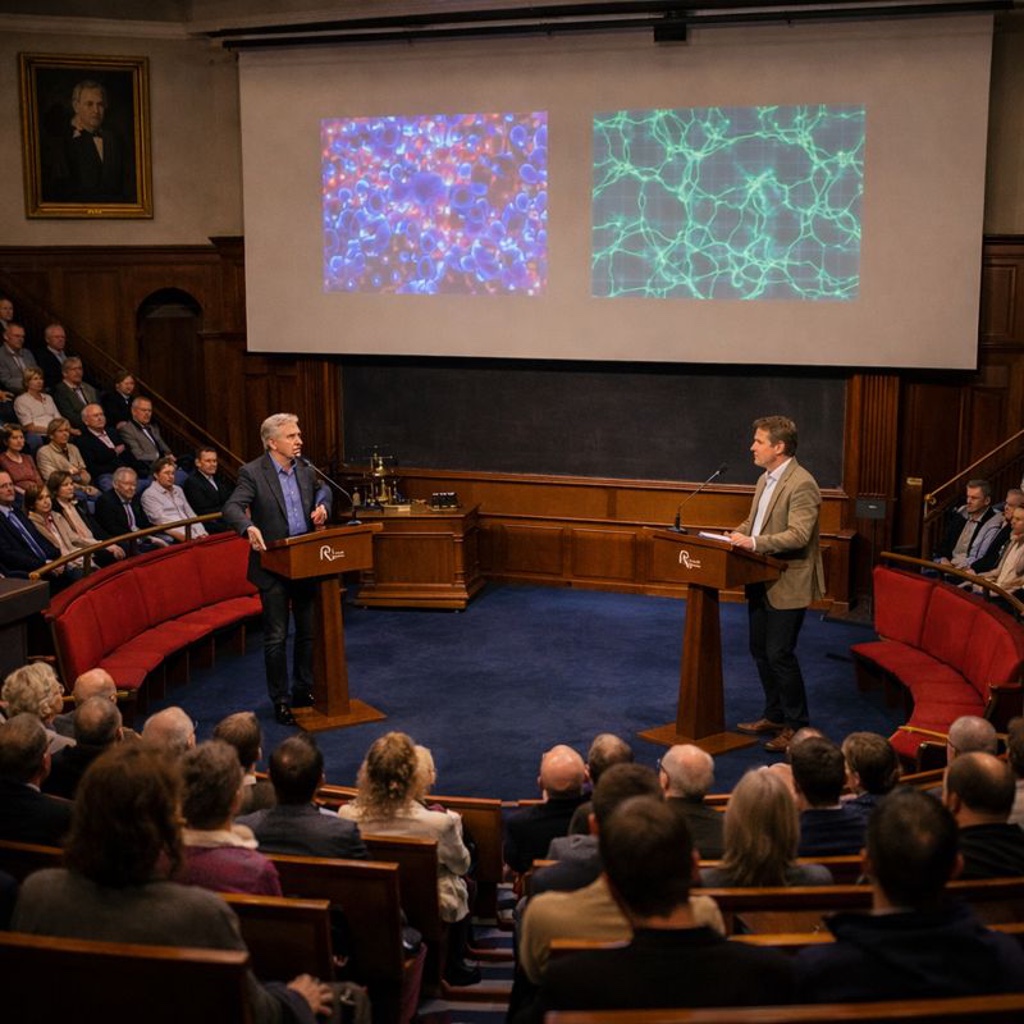
DebateThe Faraday Theatre at the Royal Institution was full in the way only certain rooms in the world could be full — not with noise, but with attention. The curved red benches rose around the stage like quiet witnesses. Most of the audience had secured their seats weeks earlier through the Institution’s event calendar: university faculty, biomedical researchers, policy advisers, graduate students, and science journalists. The event had quietly filled in days. A few latecomers still lingered on the waiting list. Near the aisles and rear doors, Royal Institution staff stood with practiced stillness. A security officer at the back rested a hand near the small radio at his shoulder, present but unobtrusive. Dr. Margaret Henshaw stood at the central desk, a small coin resting beside her notes. “Ladies and gentlemen, tonight we ask whether defeating aging is progress, hubris, or trespass.” She flipped the coin. It struck the wood softly. “Professor Kessler, you have the first question.” Henshaw: “From an evolutionary perspective, is aging a flaw in biology—or a feature?” Kessler: “A feature. Aging ensures renewal. Without it, Galileo's inquisitors would still control the Vatican. Einstein's contemporaries who rejected relativity would still run physics departments. Remove aging—with its senescence, telomere limits, and cellular turnover—and you create permanent institutional stagnation.” Mercer: “And Einstein himself would still be alive, contributing. We'd have his next forty years of insights, his perspective on quantum computing, dark energy, gravitational waves. You're defending death because bad ideas eventually die with their holders. I'd rather attack bad ideas directly.” Henshaw: “Some early longevity efforts looked experimental—diets, supplements, personal regimens. Today the field appears far more precise. What changed?” Mercer: “Understanding. We moved from guessing at metabolism to identifying exact mechanisms—senescent cell burden, mitochondrial decline, extracellular crosslinks, NAD+ depletion. We now target specific damage types with senolytics like dasatinib and quercetin, mTOR inhibitors, epigenetic reprogramming. This is cellular biology, not hopeful chemistry.” Kessler: “Precision without wisdom means we'll perfect the biology and bungle everything else. In twenty years, Silicon Valley CEOs will be biologically thirty-five while their workers age naturally because they can’t afford treatment. We'll have created biological aristocracy with molecular precision.” Henshaw: “Dr. Mercer, let's be direct. If someone takes Pill 35 and maintains treatment indefinitely, how long should they expect to live?” Mercer: “Based on actuarial data for 35-year-olds, if we eliminate age-related mortality—heart disease, cancer, organ failure—the remaining risks are accidents, violence, and acute illness. Current mortality rates suggest an average lifespan of 600 to 1000 years, assuming environmental conditions remain stable and subscribers avoid catastrophic injury.” Kessler: “And there's your problem stated plainly. Dr. Mercer just described a future where the wealthy live ten centuries while everyone else dies on schedule. You're not proposing medicine—you're proposing speciation. In three generations, treated and untreated humans will be biologically, socially, and economically separate species.” Henshaw: “Isochrona's Pill 35 has already treated over three thousand subscribers. Should we still be debating whether this is possible?” Kessler: “We're not debating possibility. We're debating wisdom. Pill 35 works—I don’t dispute that. But it combines Yamanaka factor reprogramming, senolytic clearance, and NAD+ restoration in ways we've never tested long-term. We're four years into a process that might take fifty years to fully understand.” Mercer: “And in those fifty years of caution, how many millions die preventably? Isochrona's Phase I data shows no cancer spikes, no immune collapse, no organ failures. Delay costs lives we could save today.” Henshaw: “Dr. Mercer, Pill 35 uses partial cellular reprogramming. Explain the cancer risk everyone fears—and why Isochrona believes it's solved.” Mercer: “Full Yamanaka reprogramming—OCT4, SOX2, KLF4, and c-MYC—triggers pluripotency and teratomas. Isochrona uses only OSK factors without c-MYC, achieving partial reprogramming. Cells rejuvenate without losing differentiation. It's the difference between rebooting your computer and reformatting the hard drive entirely.” Kessler: “Elegant metaphor. But cells aren’t computers. You're gambling that partial reprogramming stays partial. One mutation, one regulatory failure, and those 'rebooted' cells might not stop dividing. We won’t know for decades whether today's subscribers become tomorrow's cancer clusters.” Henshaw: “Professor Kessler, Isochrona charges five million dollars per subscriber. How is this not biological aristocracy?” Kessler: “It's worse than aristocracy—it's permanent. Historical elites eventually died. Their children competed on merit. But if a tech billionaire takes Pill 35 at sixty and lives biologically thirty-five forever, he never relinquishes control. Wealth compounds eternally. The Forbes 400 becomes immortal, and everyone else ages toward death.” Mercer: “So your solution is—what? Deny everyone because we can’t afford everyone immediately? Insulin was expensive once. Antibiotics were rationed. Cost drops with scale. Preventing all progress because early access is unequal means the working class never benefits. That's not justice—it's spite.” A woman in the third row stood abruptly. “My mother was denied treatment!” Her voice cracked. “Stage three kidney disease—Isochrona said she didn’t qualify. She's sixty-two. You're condemning her to death while billionaires buy centuries!” Dr. Henshaw raised one hand. “Ma'am, this is a moderated—” “Monsters!” Two security officers moved down the aisle. She didn’t resist. The audience sat frozen. Professor Kessler wiped his forehead with the back of his hand. Dr. Henshaw waited for the doors to close. “Shall we continue?” Henshaw: “Professor Kessler, you've had a hip replacement and take statins. Where exactly is your line between acceptable medicine and forbidden intervention?” Kessler: “My hip replacement restored mobility I'd lost. Statins prevent disease. Pill 35 doesn’t restore—it rewrites. It manipulates telomerase, clears senescent cells with dasatinib and quercetin, reprograms epigenetics. I'm treating illness. Isochrona is editing the human condition itself—claiming authorship of the species.” Mercer: “The 'human condition' you're defending includes dementia, heart failure, and osteoporosis. Pill 35 prevents those diseases at their source—cellular senescence and mitochondrial collapse. You've drawn your line precisely where your generation's technology stops. That's not principle. That's comfort with the familiar.” Near the back, a man rose, voice steady and rehearsed. “You're not fixing aging. You're breaking death. Nature didn’t design humans to outlive mountains. Every ecosystem has cycles—birth, life, decay. You're severing that cycle. This isn’t medicine. It's vandalism against life itself.” Dr. Henshaw's expression hardened. “Sir, you'll need to—” “We'll all pay the price,” he said. Security approached. He walked toward the exit without prompting, turning once at the door. Dr. Mercer watched him leave, jaw tight. “Let's go on,” Henshaw said quietly. Henshaw: “Dr. Mercer, Isochrona has medical eligibility criteria that exclude certain populations. Who cannot receive treatment, and how do you justify condemning them to mortality while others live centuries?” Mercer: “We exclude active cancer, recent stroke, traumatic brain injury, advanced dementia—conditions where restoration is biologically impossible. We're working with CMS and HHS on policy frameworks. These aren’t arbitrary exclusions. The therapy cannot regenerate what's already destroyed. We restore declining function, not absent function.” Kessler: “You've just described medical triage that determines who lives a thousand years and who dies in decades. Alzheimer's patients, severe diabetics, stroke survivors—all excluded. You're not practicing medicine. You're administering immortality to the healthy and denying it to the sick. That's not healthcare equity. That's biological apartheid.” Dr. Henshaw closed her notes. “Thank you, gentlemen.” The applause was polite, brief, and uncertain. The lights brightened. No one hurried to stand. The red benches held their occupants a moment longer, as if the room itself were considering what it had heard. Royal Institution staff remained quietly at their places. The security officer at the rear door did not move. In the same theatre where electricity had once been explained to a skeptical public, the audience now sat silently, unsure whether it had just witnessed progress… or trespass.
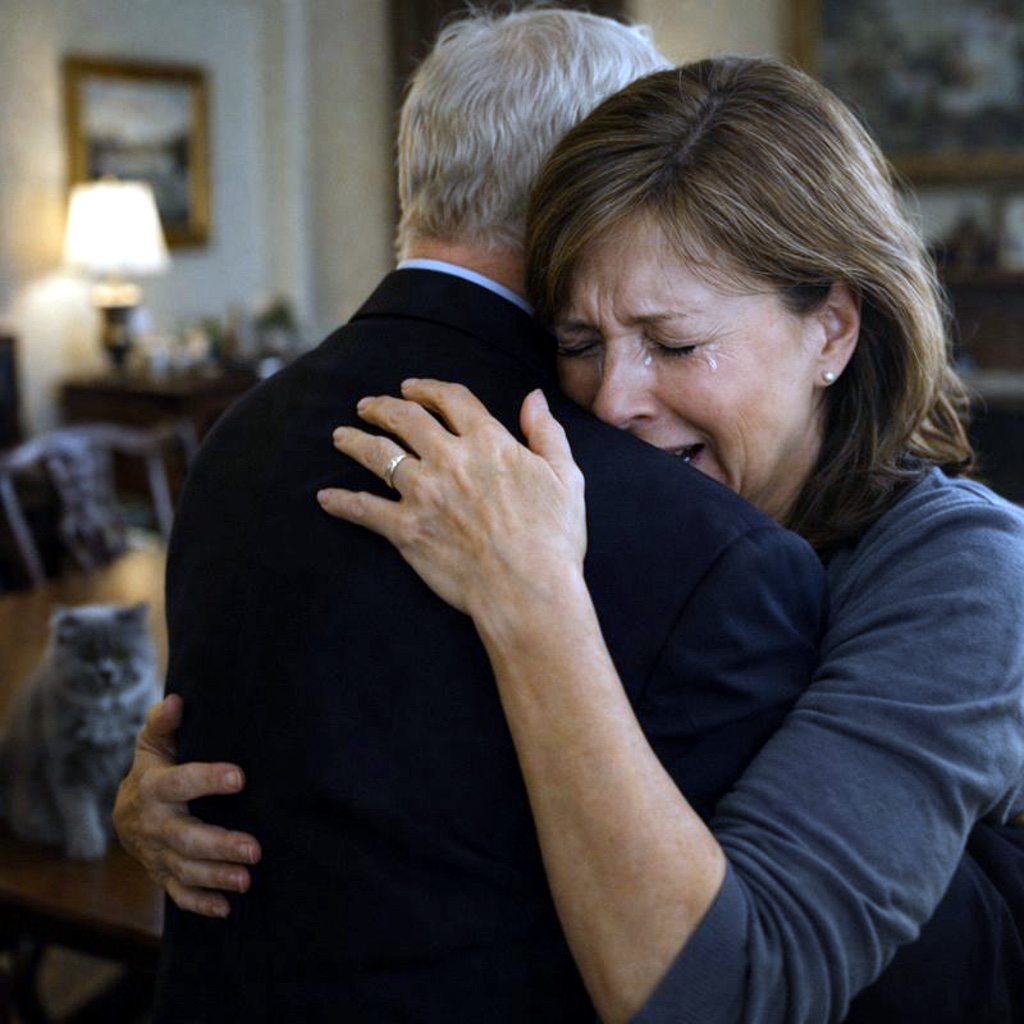
Against OddsThe restaurant was nearly full when Margaret Liu noticed them. Downtown Berkeley had softened with afternoon light, the kind that made even ordinary streets feel briefly significant. Jonathan and Claire Pierce sat near the window, their posture relaxed, their conversation unhurried. They looked like any other couple enjoying a quiet lunch — well-dressed, unremarkable, calm. Rajesh Patel followed Margaret’s gaze. He recognized Claire first. He did not say her name. Jonathan noticed them seconds later. Recognition flickered across his face—not surprise, but something closer to disbelief. He rose halfway from his chair. “Dr. Patel. Ms. Liu.” Margaret hesitated only a moment. Jonathan gestured toward the empty chairs. “Please,” he said. “Join us.” They accepted. The conversation began politely: weather, traffic, the city’s changing skyline. Claire’s voice was steady. Her movements were careful but confident. She smiled easily, as though nothing extraordinary had ever happened to her. Rajesh listened, nodded, answered when spoken to. But his attention drifted. It was not Claire’s words that pulled him away. It was the way she held her glass—hands that had once trembled. The angle of her shoulders—once slumped beneath exhaustion. The quiet rhythm of her breathing—once measured by machines. For a brief spell, in Rajesh's mind, the restaurant dissolved. Three years earlier, Jonathan Pierce had sat alone in a hospice corridor. The doctors had already finished speaking. Their words had been technical but final. Claire’s condition was systemic. No single organ had failed, yet none could sustain the others. Progressive cardiometabolic collapse. Diffuse microvascular disease. Multi-organ dysfunction. There were no treatments left to try. Hospice was not a suggestion. It was the only remaining kindness. Claire had accepted it calmly. Jonathan had not. Jonathan would visit, but Claire was gone from home. Weeks later, the hospice director had asked to speak with him privately. “There is a company,” she said carefully. “They are exploring an experimental intervention. They’ve asked us to notify families whose loved ones might qualify. We believe your wife could be eligible. If you’re interested, we can arrange a meeting.” Jonathan did not answer immediately. That night, he watched Claire sleep beneath soft lighting and quiet machines. He tried to imagine a world without her and failed. The next morning, he called the hospice office. “Yes,” he said. “I’d like to meet them.” Isochrona arrived without ceremony. Margaret Liu spoke first. Her tone was precise, deliberate. “We are not here to promise anything,” she said. Rajesh Patel spoke next. Rajesh did not talk about cures. He talked about uncertainty. “Your wife’s condition is not a single disease,” he said. “Our technology is designed to stabilize biological coordination. We do not know whether it will work. We do not know whether it will fail quietly or dramatically. We cannot predict outcomes.” Jonathan listened without interruption. “So,” he said finally, “you’re saying there’s a chance.” “I’m saying there is a question.” Jonathan did not tell Claire immediately. He waited two days. When he finally spoke, he did not begin with the word “treatment.” “What if,” he asked quietly, “there were something no one has tried before?” Claire listened without fear. Jonathan told her everything. When he finished, Claire was silent only a moment. Then she said, simply, “Let’s try it.” Phase One began quietly. There were no dramatic procedures, no sudden reversals. An infusion was administered. Monitors recorded data. Patel’s team observed. For weeks, nothing happened. Then Claire asked for solid food. Then she slept through the night. Then she sat upright without assistance. The changes were incremental, almost invisible to anyone who did not know what had come before. By the second month, she walked the hospice corridor with a physical therapist. By the third month, she walked alone. The nurses stopped whispering. Patel read data he did not trust. Liu watched without comment. At four months, Claire left hospice. Jonathan drove her home through the Oakland hills. The house waited as it always had, unchanged. Inside, Claire paused in the dining room. Sunlight lay across the table where they had once planned futures they believed would never arrive. She touched the back of a chair as if testing reality. Jonathan stood beside her, afraid to speak. Claire turned suddenly and stepped into him, gripping his jacket. Her body trembled. “Oh God.” Her head tilted downward onto his shoulder, her face turned slightly away. Tears streamed down her cheeks, soaking into his shirt. “I wasn’t supposed to be here,” she said. “John, I wasn’t supposed to be here.” Jonathan wrapped his arms around her, feeling her heartbeat—steady, undeniable—against his chest. “You’re home,” he said. Claire shook her head faintly. “No,” she said softly. “I feel like I've walked back into life.” Jonathan felt joy and fear braided together. Claire’s recovery was not complete. Physical therapy continued daily. Medical monitoring never ceased. Patel’s team tracked her biology with quiet vigilance. But she walked. She cooked. She stood beside Jonathan in the late afternoon light. Outside, the world continued as if nothing extraordinary had occurred. Inside the Pierce home, death had been interrupted. Rajesh blinked. The restaurant returned. Rajesh Patel realized he had been staring. Claire was smiling now. Jonathan was speaking about the hills after rain. The plates were nearly empty. A tear traced a quiet line down Rajesh’s cheek. Margaret noticed. “Are you alright?” she asked gently. Rajesh looked up, almost surprised to find himself in the present. “I’m OK,” he said. Jonathan stood. “It was good to see you,” he said. Claire smiled. “We hope to run into you again,” she said. As they rose, Jonathan hesitated. “I’ve applied to Isochrona,” he said quietly. “I’m on the waitlist.” Margaret looked at him. “I wish the best for you.” They exchanged polite farewells. Outside, the Berkeley air was cool. The city moved forward as it always had. Margaret walked beside Rajesh in silence. Rajesh sniffed. She reached out and patted her hand briefly on his back, just below his shoulder. Jonathan and Claire remained inside the restaurant. And somewhere between memory and eternity, the impossible continued quietly.
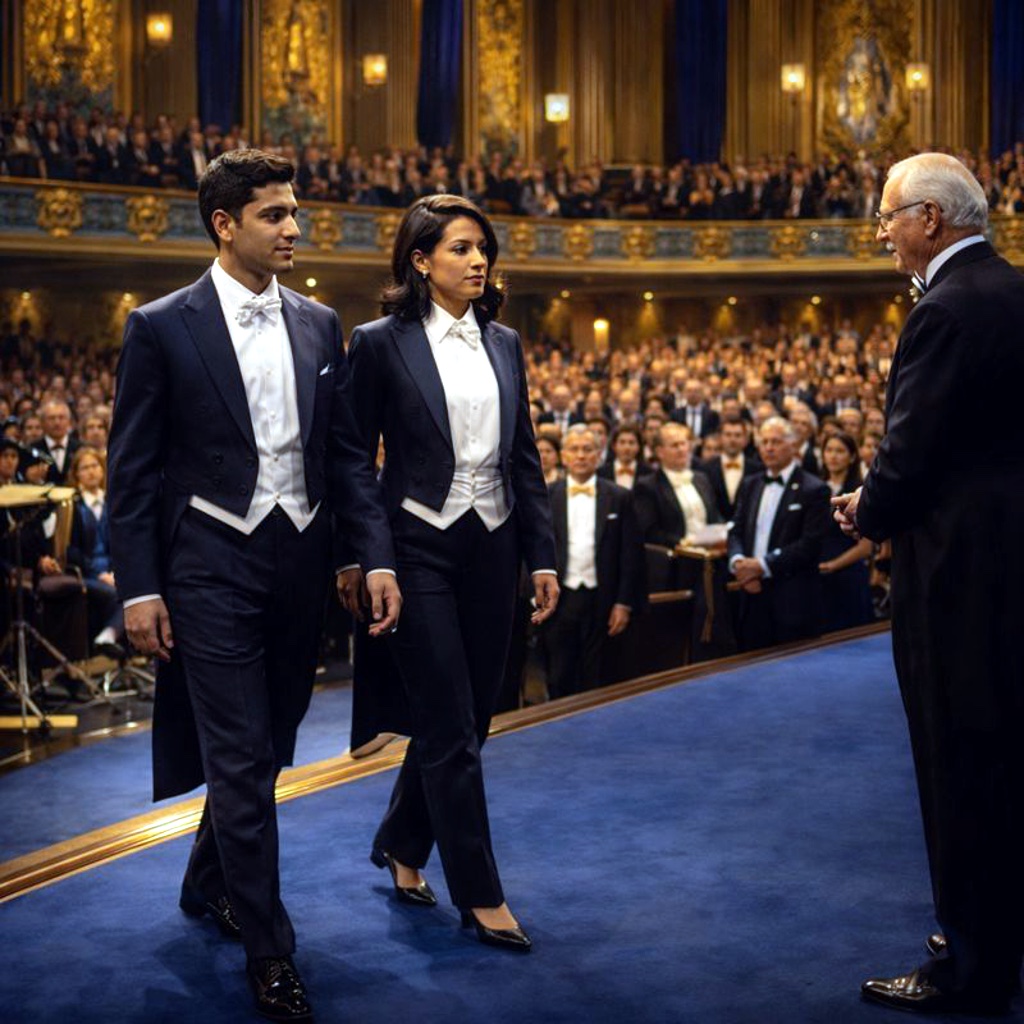
Nobel PrizeIn Stockholm, Rajesh Patel watched the livestream on his hotel room TV. A two-stage NASA Martian Module (MM) touched down intact on the flat plains of Elysium Planitia, rust-colored dust rising and settling in slow silence. Inside, Commander Elena Park and Flight Engineer Malik Okoye proceeded through checklists for nearly an hour before descending the ladder to become the first humans to step onto Mars. It was Dec 7. Dr. Rajesh Patel and Dr. Sofia Alvarez Montoya would both present back-to-back 45 minute Nobel lectures at the Karolinska Institutet today. The auditorium at the Karolinska Institutet was filled beyond capacity. Scientists, students, faculty, press, former laureates. Students stood along the walls. Former laureates leaned forward in their seats. Cameras rested on tripods like quiet animals waiting for movement. Rajesh Patel spoke first. “Chromosome 1 is not being rewritten,” he said. “It functions as a governance layer. Repair libraries are distributed across regulatory loci. Telomere dynamics, mitochondrial normalization, epigenetic convergence, and senescence clearance operate as coordinated subsystems rather than isolated interventions.” “Our objective was never rejuvenation,” he continued. “It was systemic coordination across time-dependent cellular processes.” “Aging is not a failure of tissues. It is a failure of biological synchronization.” The Karolinska Institutet audience applauded. Sofia Alvarez Montoya took the stage. “Early trials did not fail because biology resisted repair,” she said. “They failed because synchronized activation of repair pathways produced immune backlash, inflammatory cascades, and endocrine destabilization. Cells interpreted restoration as systemic trauma.” “Large-scale biological correction must be temporally modulated to avoid systemic shock.” “Temporal Homeostasis Architecture staggers telomere restoration, mitochondrial recovery, senescence targeting, and epigenetic reprogramming so that no pathway surges ahead of the others.” Three days later, on Dec 10, snow fell lightly outside the Stockholm Concert Hall as the orchestra tuned. Inside the blue and gold hall, white tie and tails formed careful lines along the aisles. The Swedish royal family sat in the front row beneath warm lights. Rajesh stood backstage with Sofia, listening to their names being rehearsed by a master of ceremonies in careful Swedish. He felt strangely calm. This, he realized, was the first room in months where no one asked him to explain anything. When their names were called, they walked together across the polished stage. Their stride was measured, deliberate. The applause rose politely, formally. Rajesh bowed to the King, accepted his medal and diploma, and shook hands. The medal felt heavier than he expected. Sofia's acceptance followed. The same applause. The same ritual. Two individuals recognized for something neither of them had ever worked on alone. From the audience, Samuel Kerr watched without moving. Margaret Liu sat beside him, hands folded in her lap. Neither spoke. They understood that what the world was celebrating had begun in quiet rooms far from this hall. The orchestra swelled. Names were read. History arranged itself into order. At Stockholm City Hall, candles lined the long banquet tables of the Blue Hall like a river of small suns. Thirteen hundred guests descended the grand staircase in slow procession. Crystal glasses chimed softly. Gold reflected off the vaulted ceiling. Rajesh found himself seated beside a Swedish princess who asked, gently, whether Pill 35 would one day be available to everyone. He smiled. “That is the only outcome that makes sense,” he said. Across the hall, Sofia explained Temporal Homeostasis with a fork and a folded napkin to a journalist who struggled to follow her metaphors. She laughed quietly, unguarded, for the first time all evening. Margaret and Kerr watched from their table with a kind of private disbelief. Neither had ever imagined this room when they walked the halls of Isochrona and Chronexia. Later, in the Golden Hall, speeches were given. The banquet speeches -- to royalty, diplomats, celebrities, laureates, guests -- were scheduled to last 3–5 minutes each. These speeches would be shorter and less formal than the Nobel lectures which Rajesh and Sofia gave earlier in the week. Rajesh spoke briefly. He did not mention Pill 35. He spoke about coordination, about how modern medicine had learned to repair parts but not systems. Sofia followed. “We stand here,” she said, “because the human body still remembers how to remain alive. We are only helping it to remember.” Applause filled the hall, warm and sustained. Long after the Golden Hall candles were extinguished and the Nobel Prize medals placed into velvet cases, work went on in quiet laboratories, unchanged by applause and untouched by ceremony. In her 1933 lecture, “The Discovery of Radium”, delivered in Madrid, Marie Curie said: “Nothing in life is to be feared, it is only to be understood.” Pill 35 continued forward, not as a triumph over nature, but as a deeper understanding of it. |

|
Pill 35 (Part 4)
|